
Open Source Innovations & Solutions at LINBIT
Perhaps there is a feeling that you might be making the world a better place by choosing to use open source software rather than other alternatives. Maybe this positive feeling spawns an action. If you get a benefit from using a particular open source project, sometimes you might support that project by making a donation […]
Comparing CloudStack, OpenNebula & OpenStack
This post is intended to help someone learn more about three of the most popular open source virtualization management platforms for large IaaS deployments (in alphabetical order): CloudStack, OpenNebula, and OpenStack. You are reading this article on the LINBIT® blog because LINBIT develops integrations for these platforms that you can use to provide software-defined storage […]
Controlling Data Replication with Snapshot Shipping Using LINSTOR
In distributed data storage environments, ensuring data consistency and availability across multiple nodes is crucial. LINSTOR®, the open source software-defined storage (SDS) software created by LINBIT®, is a robust tool for managing data replication and maintaining data integrity both locally for high availability (HA), and across distances for disaster recovery (DR), backup, and other reasons. […]
Ready-made CloudStack Deployment on Hyperconverged Infrastructure with SDS, HA, and DR Capabilities
In an exciting, possibly world-first offering, the LINBIT® team has created the LINBIT® CloudStack® HCI Appliance. The appliance, built on open source software, is an easy way to deploy CloudStack. Beyond that, the appliance includes LINBIT-developed software such as DRBD®, LINSTOR®, DRBD Reactor, LINSTOR Gateway, and related utilities, plus the LINSTOR integration plugin for CloudStack, […]
Setting Up a Highly Available SMB Share for Windows by Using WinDRBD & DRBD
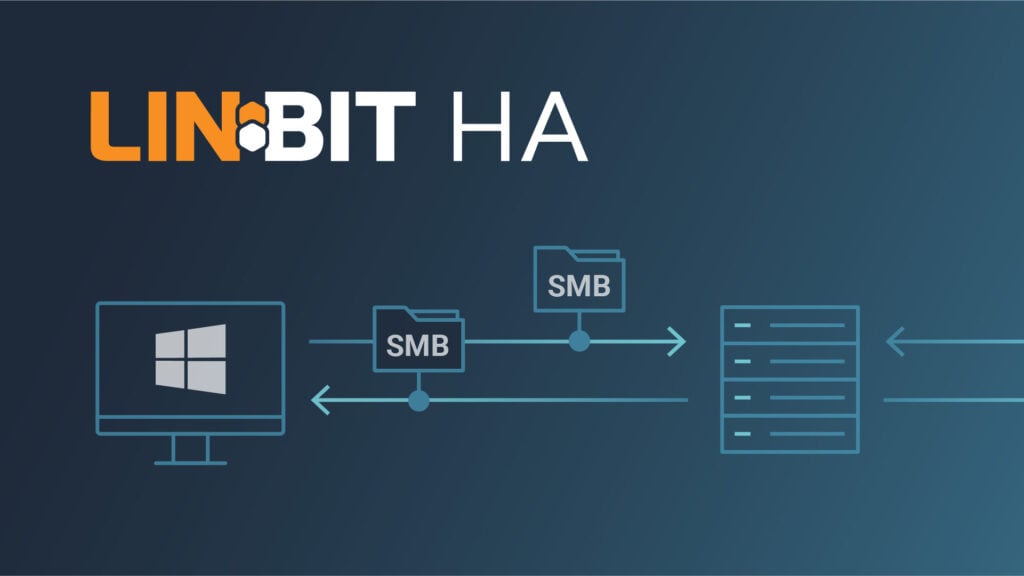
During my years as a system administrator, I have worked as much with Windows servers as I have with Linux systems. Installing and managing SMB, a file-sharing protocol frequently used in small and medium-sized companies, is relatively straightforward and hassle-free on Windows servers. However, ensuring this service runs continuously can be a challenge. In this […]
Working on a More Straightforward Offering

The Broadcom shock still affects many VMWare users. Some might have initially accepted the higher cost in the short term, but that doesn’t mean they aren’t still looking for an exit path from VMWare. Operating a scalable and highly available virtualization platform involves solving multiple challenges. The open-source options for the hypervisor technology are KVM […]
Striping LINSTOR Volumes Across Several Physical Devices
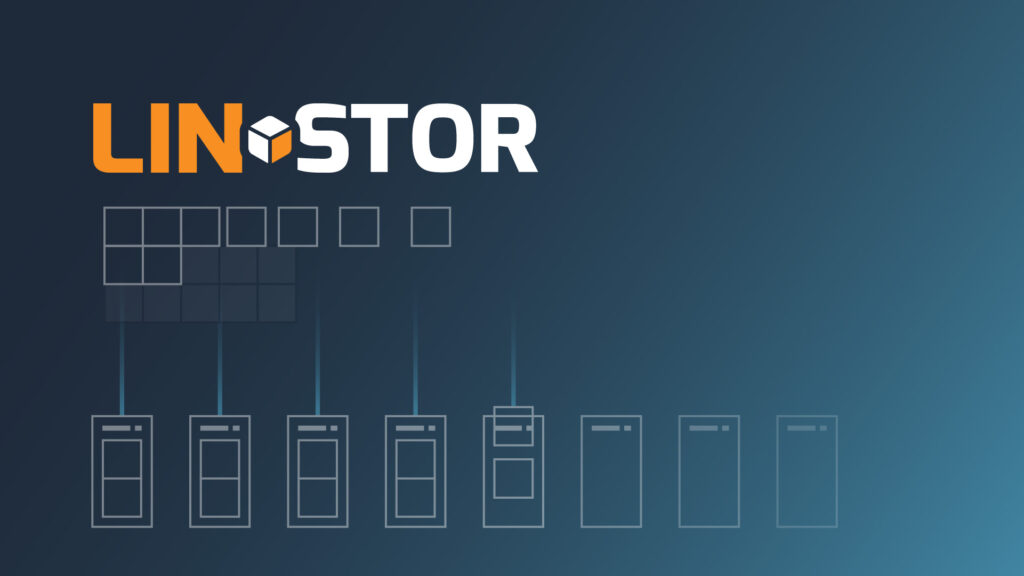
Introduction and considerations In a single sentence, striping can be described as a technique used in storage systems to spread data across multiple physical disks by dividing it into small chunks, which are written sequentially to different drives. Striping volumes across several physical devices in a LINSTOR® storage pool improves performance by distributing I/O operations […]
The CAP theorem & LINBIT
I was recently asked which trade-offs LINBIT’s solution chose under the CAP theorem. The CAP theorem says that a distributed system can provide only two out of three properties: Consistency, Availability, and Partition tolerance. As you can read in the linked article, all practical systems must tolerate partitioning, which leaves us with the choice of whether the software provides consistency […]
Deploying Secure & Redundant Military Data Storage with LINSTOR
Many current software-defined storage (SDS) solutions hinge on the concept of redundant architectures and data center facilities, often relying on multiple systems to guarantee data security and availability. Yet, the evolving landscape demands SDS solutions that can stand strong even without these redundant fallbacks. In scenarios where setting up multiple backup sites or systems isn’t […]
Managing DRBD By Using systemd Units
DRBD® is an important open source software component that can replicate data across multiple servers and can help make applications highly available. Traditionally, system administrators have used tools such as Pacemaker and DRBD Reactor to manage DRBD resources in a cluster and to facilitate high availability (HA) by handling fail-over situations. There are several use […]