
Using DRBD to Build a Reliable & High-performing 2-node HA Solution
Since 2024, LINBIT® has partnered with the open source-focused enterprise data storage, compute, and virtualization solutions company, 45Drives. This partnership helps 45Drives bring a high-performing, low-resource consuming, block storage-based 2-node high availability (HA) solution to their customers. Their HA solution based on DRBD® is a middle ground between their single-node ZFS offering and the resource […]
LINSTOR Operator 2.10.5 Update
We’ll start by sharing the latest bug fix for our Kubernetes Operator, LINSTOR Operator 2.10.5. This time, we’ve taken the plunge to update LINSTOR to 1.33.1, along with updating to the latest DRBD 9.2.17. These fix a number of bugs, so updating is recommended. In the next feature release, we will update DRBD to 9.3.x. […]
Claude, Anthropic’s Mythos, & a Potential Danger

Once more, I am writing about AI. By now, I have become a nearly daily user of Claude Code. I have learned how to work with it. I learned to structure the work so that my LLM agent does not run into the Context Rot problem. Maintaining the CLAUDE.md file. Every time it makes a […]
Working to Put DRBD 9 in the Mainline Linux Kernel
The LINBIT® team has been busy for more than a year on development work that could put DRBD® 9 in the mainline Linux kernel, possibly as soon as the Linux 7.2 release sometime in September or October 2026. The current version of the DRBD kernel module in the mainline Linux kernel is 8.4.11. While the […]
Merging DRBD-9.3 into the Linux Upstream
We are currently working on merging DRBD-9.3 into the Linux upstream. But how did we get here? DRBD-8.4 works only with a single peer; it is a software for two-node failover clusters. And the DRBD that comes with the upstream Linux is equivalent to drbd-8.4. The most recent release was 8.4.11, eight years ago. However, […]
Integrating External LINSTOR Clusters With Kubernetes by Using the LINSTOR CSI Driver
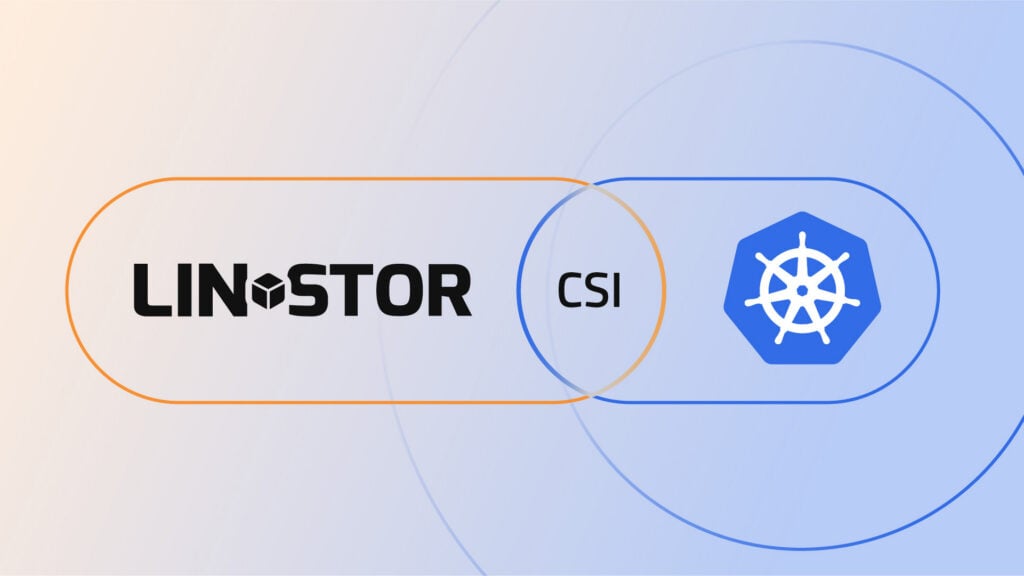
Much has changed in how LINSTOR® is typically deployed into Kubernetes clusters over the years. I’m referring to the LINSTOR Operator for Kubernetes which is now at a v2 release, but the CSI plugin is still the bridge between Kubernetes and LINSTOR-managed replicated block storage. While LINBIT® encourages its customers and users to use the LINSTOR Operator […]
Making a 10+ Year Dream Come True With an AI Coding Agent

As we all know, AI is still going strong as the latest and greatest thing since sliced bread. While it’s an amazing tool and is enabling lots of neat things to happen, I see it as an evolution of existing tools. Similar to how a hammer got superseded by a nail gun or roofing nailer. […]
Highly Available NFS Storage using LINBIT HA for Kubernetes

While NFS (Network File System) isn’t a new or exciting technology, it is one of the more common storage solutions for Kubernetes clusters that require persistent storage. Particularly, applications or pods requiring shared, network-based, “read write many” (RWX) access to storage in Kubernetes can benefit from the familiar storage solution. LINBIT® supports clients who build […]
The Benefits of High Availability (HA)

This article describes the reasoning behind and the benefits of a high-availability (HA) solution for providing services and applications. This article is intended as a general overview and introduction to HA, with a nontechnical reader in mind. Because you are reading this article on the LINBIT® blog, you will also learn how LINBIT software can […]
Replication Speed and CPU Efficiency Improvements in DRBD 9.3.1
The release of DRBD® 9.3.1 brings with it a “streaming I/O” feature. This feature means that DRBD can allocate compound pages from the kernel as I/O buffers. When applications make large I/O requests or streaming accesses, using compound pages can improve performance because DRBD will use CPU resources more efficiently. Background on DRBD memory allocation […]