
Highly Available KVM Virtualization Using DRBD & Pacemaker Tech Guide
One of the many use cases for DRBD® replication technology is to replicate a device that backs a storage volume that is in a backing storage role for a KVM virtual machine (VM) image. You can use this replication strategy, with Pacemaker configured as the cluster manager, to create a high-availability (HA) KVM virtualization solution. […]
Open Source Workload Orchestrators

LINBIT® SDS is available for Kubernetes (and OpenShift), Apache CloudStack, Open Stack, OpenNebula, XCP-ng, and Proxmox. When I think of a name for these, I always return to ‘Open source workload orchestrators.’ So far, there is one name missing from that list: oVirt. oVirt is the Open Source upstream for Oracle Virtualization Manager and Red Hat […]
Benchmarking on Ampere Altra Max Platform with LINBIT SDS
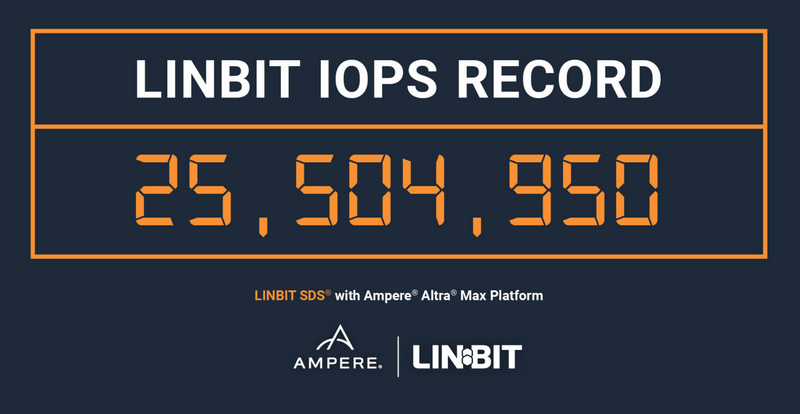
Ampere® and LINBIT® collaborated on some exciting benchmarking of Ampere’s Altra® Max Platform using LINBIT SDS to manage and replicate some seriously fast Samsung PM1733a SSD drives and are ready to start sharing our results. The exhaustive hardware and software configurations, as well as the testing methods used along with their results can be found […]
Create a Docker Swarm with Volume Replication Using LINBIT SDS
With container orchestrators like Kubernetes, OpenShift, and Nomad often taking the spotlight, Docker swarm hasn’t been getting as much attention. That doesn’t mean we’ve forgotten about it! Docker swarm is known for being easy to learn and use, making it an appealing container orchestration platform for smaller teams, or anyone looking to focus more on […]
High Availability with DRBD Reactor & Promoter
In this blog post, we discuss the DRBD® Reactor and Promoter plug-in. Please read the overview blog post first if you’re looking for a general introduction to DRBD Reactor. This DRBD Reactor & Promoter post first appeared in February 2022. We have updated it for technical accuracy and clarity, referencing a new chapter in the […]
Open Source, Open Hearted: LINBIT’s Shift Towards a More Authentic Newsletter

When it comes to company newsletters, the traditional approach has been maintaining a formal, marketing-driven tone. However, as the business landscape evolves, I believe that many companies are shifting towards a more personal and community-focused approach to their newsletters. I feel that this is especially true in the open-source software industry, where transparency, collaboration, and […]
DRBD Quorum Implementation Updates
The Origins With version 9, we introduced the capability of building clusters larger than two nodes to DRBD®. That gave us the means to implement the concept of quorum and eliminate the old plague of many clusters: the split-brain. The concept is intriguingly simple. A partition of the cluster may modify the data when it […]
DRBD’s Hardware & Environment Requirements
Whether you are considering DRBD® as a data replication solution to achieve high-availability or disaster recovery in your deployments, or you are seasoned in its use already, there are some hardware and environment requirements that you should consider. Memory Requirements and Maximum Device Size DRBD can replicate block devices in real-time or asynchronously, depending on […]
Upgrading DRBD Has Never Been Easier
As DRBD® development continues to move forward with the new and exciting 9.2.0 release, it has never been easier to upgrade to the latest version of DRBD. DRBD’s wire-protocol compatibility has recently expanded, enabling replication between DRBD 8.4 and the latest versions of DRBD 9. Upgrading From DRBD 9 Upgrading from DRBD 9 to a newer version of […]
AWS Marketplace Listing for LINSTOR, DRBD, & DRBD Reactor
It has never been easier to use LINBIT®’s suite of storage and high availability (HA) tools in AWS. LINBIT recently added a free to use AMI listing to the AWS Marketplace based on the latest Ubuntu LTS release with LINBIT’s Ubuntu Personal Package Archive (PPA) preconfigured and LINBIT’s packages preinstalled. What’s in the Box? Out […]